Meshtastic - how to connect people without network?

Off-grid message exchange is often associated, in people’s minds, with preppers or individuals convinced that catastrophes are coming. However, exchanging messages without using a cellular network can be a great example of how, with low cost and minimal effort, one can create a network that not only connects devices, but also connects people and builds a community of individuals passionate about technological innovations.
What is the tech behind off-grid mesh
In a word: LoRa. But the rabbit hole goes much deeper than a single tech name. This protocol was designed with long-range communication in mind. The technology is used in many applications, from remote weather stations to tracking cars or transmitting telemetry from weather balloons. Using this radio is very energy-efficient. So efficient that devices can run on single 18650 cells for many hours without needing to be recharged.
Devices? What devices?
Meshtastic works by creating a mesh network with small devices powered by a 3.3V power source. These devices connect to users’ smartphones via Bluetooth or Wi-Fi. This is possible because the devices have two antennas.
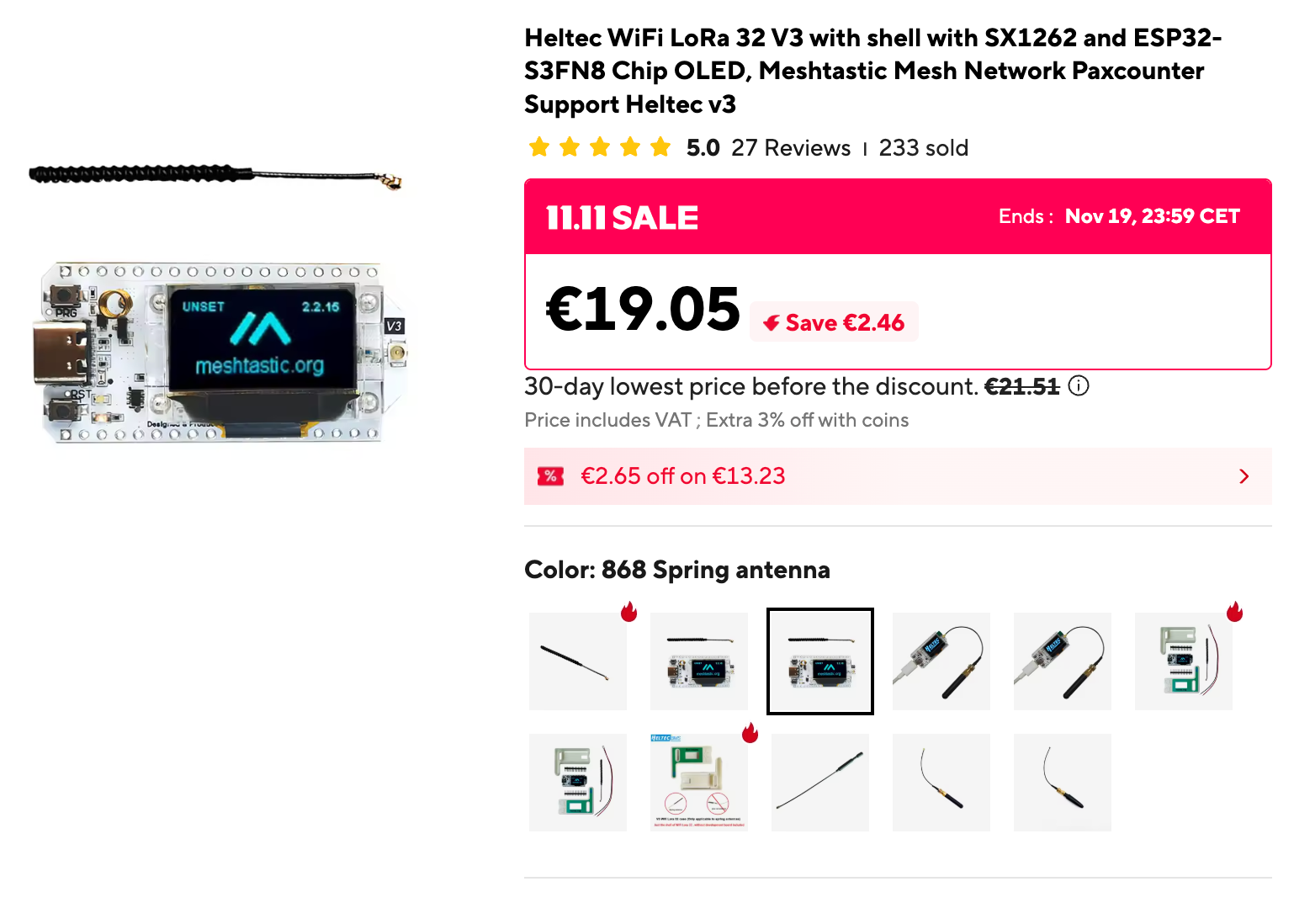
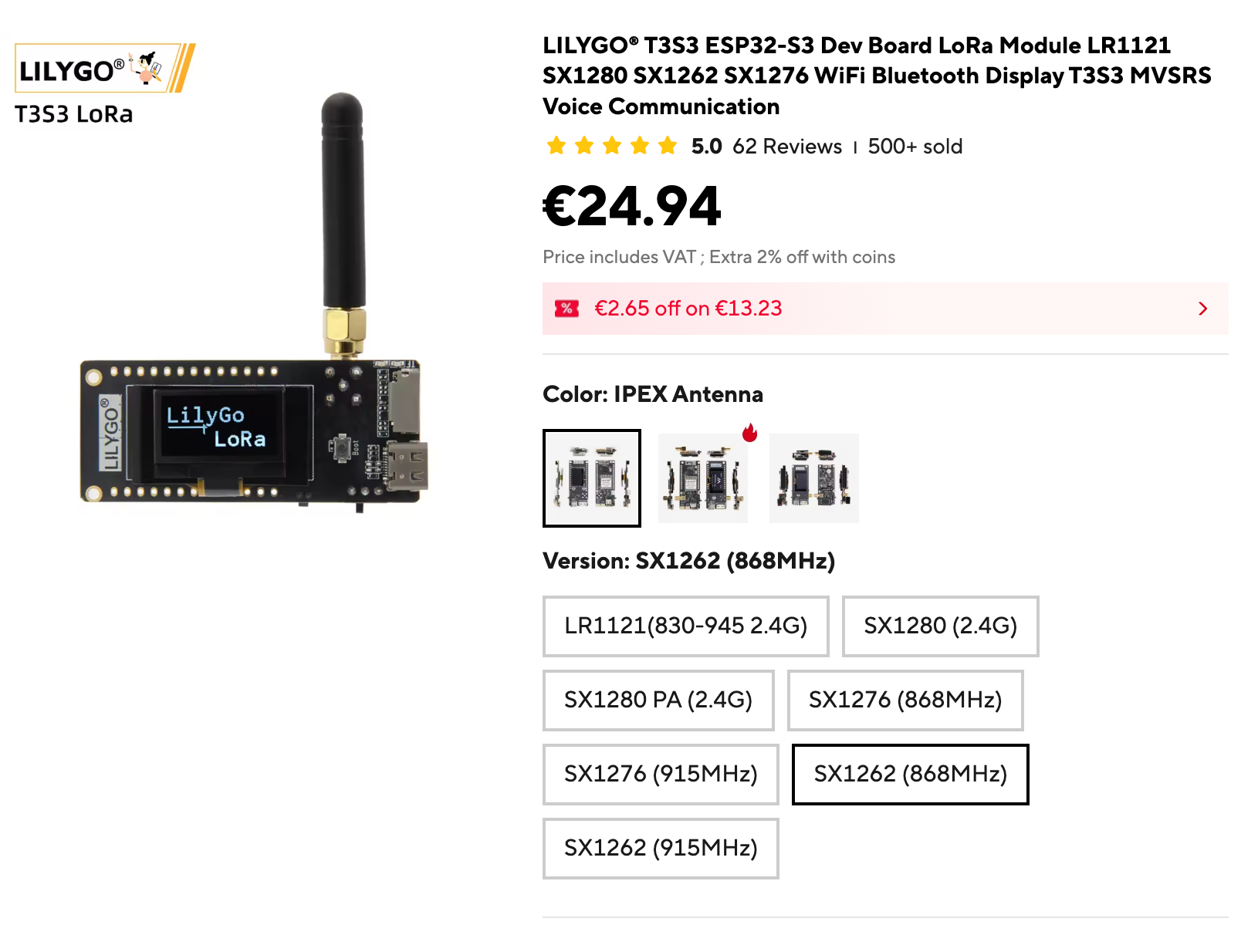
Devices are often purchased from Chinese e-commerce shops, as this is usually the cheapest option. Examples include:
Heltec v3 (ESP32 based)
LilyGo T3S3 (ESP32 based)
Sensecap T1000 E (nRF based)
Ideal for people who do not want to draw anyone’s attention to this completely-not-a-bomb-looking device with wires hanging off it 😬.
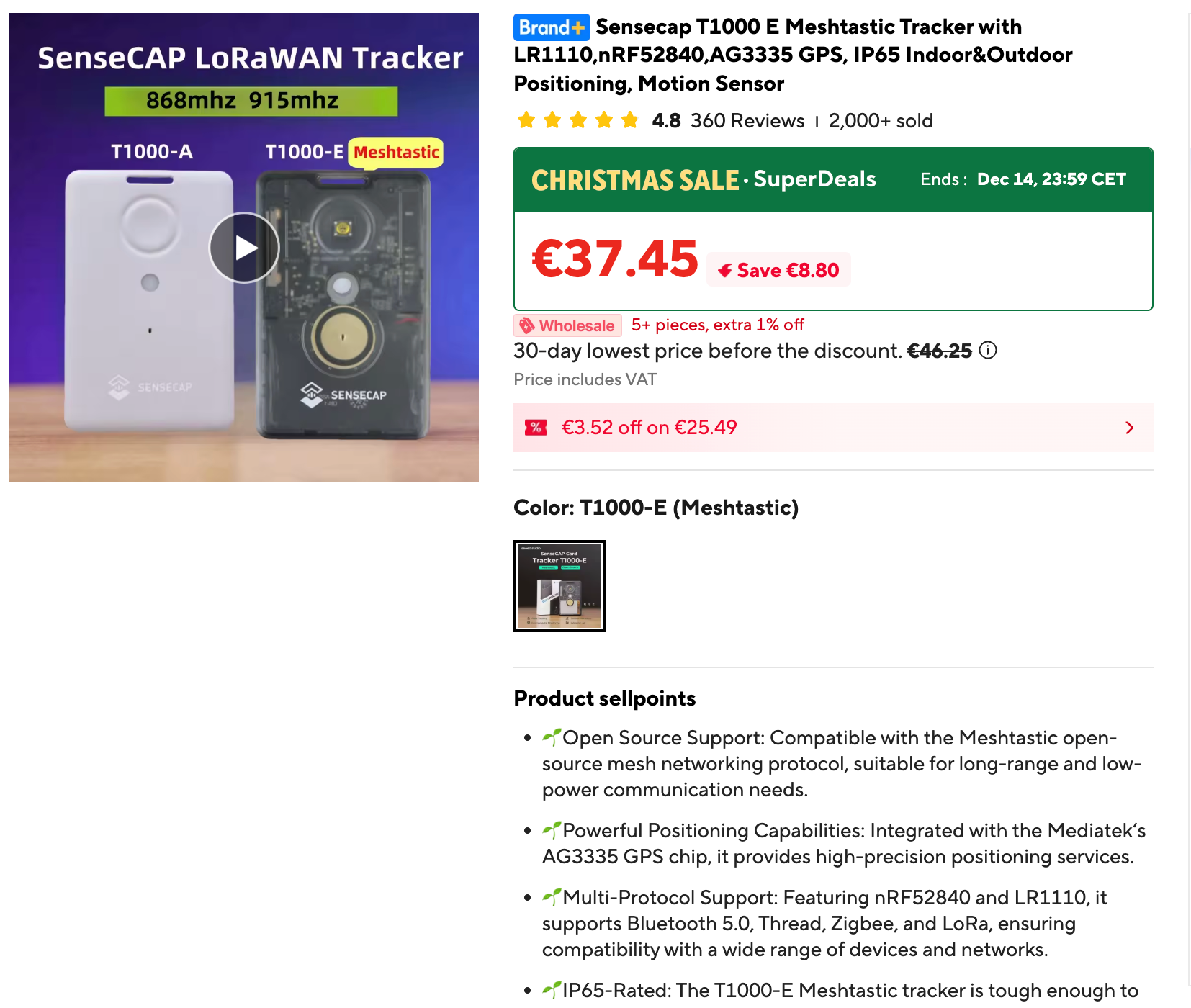
The devices listed above are not the most energy-efficient options available to the public. The Heltec v3 and LilyGo T3S3 are based on the ESP32 SoC, which is one of the most popular platforms for Bluetooth- and Wi-Fi-based connectivity, but the Nordic nRF platform is far more energy-efficient.
How the mesh works?
The mesh is only able to transmit messages through seven other devices. This ensures that messages are not rebroadcast over and over, which would slowly clog up the network.
A mesh consists of several different device roles. For Meshtastic, the most common roles are: CLIENT, REPEATER, and ROUTER. A few words about each:
CLIENT - This is the end device in the mesh. It receives data from LoRa, decodes it, and sends it to your smartphone. In Meshtastic, it also repeats data, decreasing the number of available routing hops. This article is focused mainly on such devices (which doesn’t mean they cannot be configured as other types).
REPEATER - A device that repeats data without decreasing the available routing hops of messages. It is invisible in the network and rebroadcasts everything it receives.
ROUTER - A device placed in strategic locations. It rebroadcasts messages only once, decreases routing hops, and is visible in the mesh.
Meshes Evolve
Add a new node? The network shifts.
Remove one? It shifts again.
Move one three meters to the left? It can suddenly see nodes it didn’t see before and develops a whole new personality.
If you manage to buy one of the devices and try them out, you’ll notice that even moving a device across a window ledge will reveal different nodes.
There’s something strangely alive about watching a mesh evolve. It’s basically a digital ant colony-minus the ants, plus radios.
What are the limitations of this?
Nothing is perfect - neither is LoRa. The main limitations are:
ISM band usage
As per EU regulations, 868 MHz is in the so-called ISM (Industrial, Scientific, Medical) band, which means that the maximum power output of these devices is capped at 500 mW, but anyone can use it without a license.
Another limitation related to ISM bands is the duty cycle: for each 60 minutes, your device can transmit for only 6 minutes. This ensures that everyone can transmit without causing much interference.
Since anyone can use this band without a license, it is widely used in home appliances such as garage door openers.
Transmission rates are very slow
This technology can only transmit text. You can forget about sending memes over it or calling your loved ones who are on a hike.
Line of sight propagation
In my opinion, this is the most troublesome limitation. Line of sight means that if you can see the receiver, you can send and receive data with it. If you are in a valley or an urban area, communication is very limited. This is why nodes designed to route or repeat user packets are placed on top of hills or the highest buildings.
There is a bit more to this limitation, but fresnel zones are a bit much for a introductory post.
Need of a phone
Simpler (and most affordable) solutions still require a phone to send and receive messages. There are devices like the Lilygo T-Deck, which look like a phone with a physical keyboard, but they are on the pricier side of the device spectrum. This is a limitation because you can have a solar mesh node designed to work even if the past two weeks were cloudy, thanks to multiple 18650 cells-but what can you do with it if your phone is dead within the first 24 hours since the last full charge?
Why such technology even matters?
The main idea behind this technology isn’t to replace SMS text messages or the internet. This is something to keep in mind, to experiment with, and there will come a time when you will think:
Now will be the right time to use this device that was lying for some time.
Imagine having these devices at a concert or festival, where the cellular network is almost always clogged during the show. You want to grab a beer, so you detach from your friends. But thanks to these little genius devices, you can skip the overloaded cell network and message them that you are waiting in line.
Another use is during hiking. You leave the camp alone because your friends are not in the mood to summit another mountain. You bring this device with you, and if you maintain line of sight to the camp, you can message others about your status.
And the most important-or most feared by me (I don’t want to sound like a weirdo)-is emergency data transmission in the event of a catastrophe. Those little devices can make a real difference. The cost won’t matter if this is the only way to communicate with others.
How to start?
If you bought a device, just Google its name with “Meshtastic” at the end. For every device, there is community support, tons of YouTube videos, and groups on Facebook or WhatsApp where you can find help.

The link above is the best place to start. In the docs section, you can find the list of supported devices. In most cases, you don’t even need a soldering iron or custom ESP32 programming cables - a simple USB-A to USB-C cable is enough. Meshtastic has a neat way of flashing the software onto devices using a webpage. Yes, you heard that right! You can select the COM device from your browser window and flash it directly from there.
MeshCore - a (better?) alternative
There is a new standard that is gaining traction very quickly. MeshCore works on the same wavelengths, devices, and protocols but differs in some ways that make the mesh more reliable. Despite many similarities, these two technologies are not interoperable. Keep an eye on the MeshCore map and check if it is a better alternative in your area. Just keep in mind that this map does not contain every node-users must take certain actions to share them. The best way to find the optimal solution is to flash one software, let it run for a few days, and then explore other options.
Due to some architectural changes, MeshCore allows more users to communicate without the entire network clogging up or interfering with other users’ transmissions.
Final word
This isn’t something that everyone will be communicating with in the near future. It is a niche for tinkerers who love to do something different in their free time. The strength of this mesh is that it is built by people who care about details, and it is designed with open-source principles in mind. It’s safe, cheap, open, and resilient.
You should try it too. It gives a feeling of achievement when you get a notification on your phone that you have just discovered a new node in your neighborhood. You can easily go beyond just creating a client device-you can look up how to create a router somewhere high in your area.
Just keep in mind that it’s contagious, addictive, and a lot of fun to work with.
